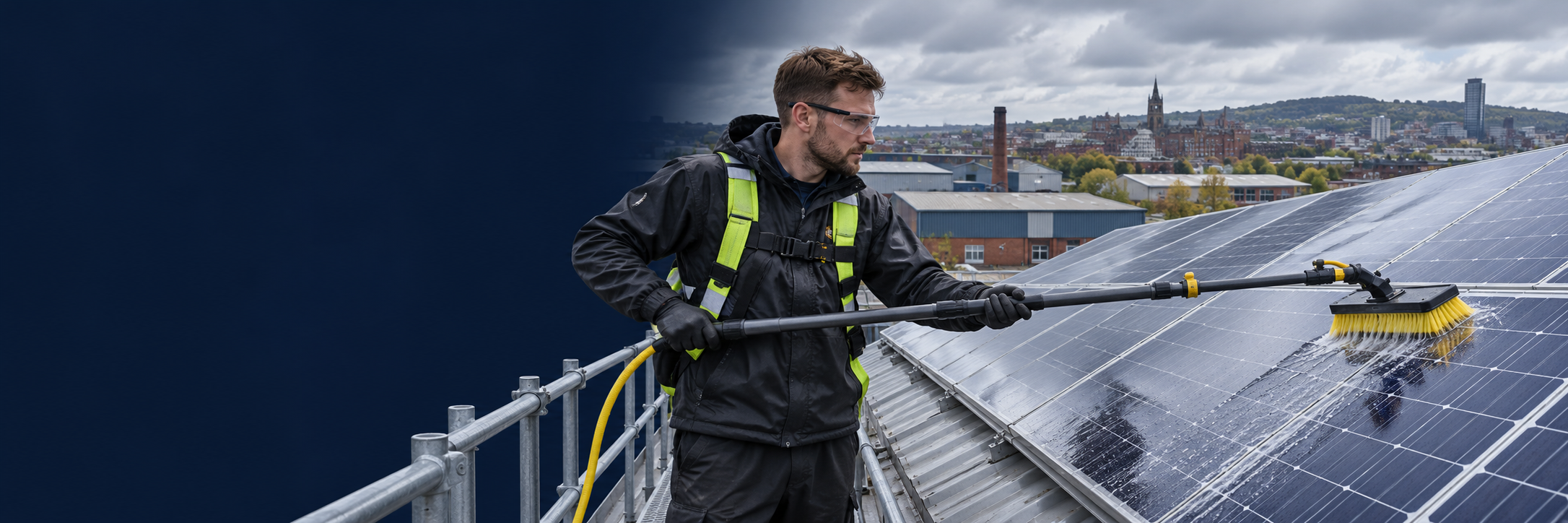
Solar panel cleaning in Sheffield and South Yorkshire
When asking about solar panel cleaning in Sheffield, the number of modules is only part of the brief. Tell us whether the marks sit below an aerial, along a low edge or across the glass. If generation has fallen, say when you noticed it so the installer can distinguish a performance question from a request to remove visible deposits.
Cleaning begins with the installation specification
Solar panel cleaning in Sheffield should begin with the type of modules, their mounting arrangement and the guidance supplied by the manufacturer or installer. Glass coatings, frames, seals and electrical connections are not ordinary roof surfaces. A method suitable for adjacent tiles or metal cladding may be unsuitable for a photovoltaic array. We ask how many modules are installed, whether they are on a domestic roof, a commercial roof or a ground-mounted structure, and whether any maintenance instructions are available. The condition of the panels and the safe access route are assessed before a cleaning date is proposed. Visible staining may be dust, pollen, bird fouling, mineral spotting or a combination. The aim is measured removal of deposits while respecting the installation, rather than a claim that every panel needs frequent washing or that cleaning alone will guarantee a particular output.
When a panel may benefit from cleaning
Rain removes some loose dust, but not every deposit. Bird droppings, accumulated leaf matter, pollen and residue near industrial or road environments can remain on the glass, especially at a shallow pitch or beneath overhanging trees. A visibly uneven pattern can justify inspection, yet a change in energy production can also result from shade, weather, equipment faults or monitoring settings. We do not diagnose electrical performance through a cleaning visit. Owners can compare recent photographs with the array’s usual appearance and consult their installer if a technical fault is suspected. We focus on the condition that cleaning can address and explain when another professional should check the system. An honest assessment may find that an array is already acceptably clean and that an immediate visit offers little practical benefit.
Water quality and contact with the glass
The manufacturer’s instructions take priority in choosing water, tools and products. A controlled flow with suitable water and non abrasive equipment can avoid leaving mineral deposits or scratching the glazing. We do not assume that a strong detergent, hot water or pressure washer is appropriate. Temperature differences between water and a hot panel also deserve consideration, so timing can be adjusted around weather and exposure. The team keeps contact with the surface deliberate and avoids leaning on panels, frames or cables. If a coating or glass surface shows damage, cleaning may be paused until the owner has obtained technical advice. The objective is to lift soiling without introducing an avoidable defect. A quotation identifies the proposed method and any need for a small trial where compatibility is uncertain.
Electrical equipment and boundaries of the cleaning role
A photovoltaic array remains an electrical installation. Cleaning technicians should know the physical boundaries of their work and avoid opening enclosures, disturbing connectors or altering wiring. The location of inverters, isolators and visible cables is discussed with the owner or facilities contact. Where equipment appears damaged or unsafe, we stop and recommend assessment by a competent electrical professional. Cleaning cannot certify electrical safety or repair an installation. Water use is planned to respect the equipment and manufacturer recommendations. A ground-mounted array may offer easier access than a roof array, but electrical and slip risks still need a considered method. The work plan should make clear which components are touched and which are excluded, so that nobody mistakes a surface cleaning visit for an inspection of system performance.
Access to domestic roof arrays
Roof access is often the decisive issue. A two storey home with panels above a conservatory or extension may be harder to reach than a taller building with a protected access platform. The team assesses roof pitch, edges, fragile elements, ground conditions and the available space for equipment. We consider whether work can be completed from a safer position without walking on the roof. Ladders are not a default working platform for every installation. Wind, rain, ice and intense sun can affect the suitability of the planned method. Residents and neighbours may need to keep clear of an area below the work. A safe access plan is part of the quotation, not an afterthought added once technicians arrive. If the array cannot be reached safely with the agreed arrangements, we discuss a different method or defer the visit.
Commercial roofs and larger arrays
Warehouses, schools and managed buildings may have large arrays split across roof sections. We ask for layout drawings or clear photographs, the roof access procedure, known fragile areas and any operational constraints. Cleaning can be phased around deliveries, production and building users. Facilities teams may need a method statement, risk assessment, insurance evidence and a record of completed zones. We coordinate with the responsible person but do not assume permission to change the operation of the electrical system. A roof with skylights or roof plant needs particular attention to routes and exclusion zones. A quotation can distinguish panel cleaning from roof covering, gutter and façade work, so that each task receives the correct technique and resource. In Sheffield’s Lower Don Valley and across South Yorkshire industrial areas, this planning often matters as much as the number of modules.
Bird fouling and local deposits
Bird activity can leave concentrated deposits on individual panels, frames and the roof around an array. Dry scraping can be unsuitable for the glass and may spread material. We plan controlled wetting and removal in accordance with the panel specification, together with safe handling of surrounding contamination. If birds continue to roost, cleaning alone will not prevent recurrence. The owner may want a separate assessment of nesting or proofing, taking account of any legal restrictions on active nests. We do not promise that a one time clean solves the underlying bird activity. Leaf litter and fine debris also collect beneath some arrays, but reaching beneath panels or moving equipment may fall outside the cleaning scope. The quote should state exactly which visible surfaces and accessible edges are included.
Photograph the pattern from a safe position and note whether it returns below the same aerial or roof edge. Where fouling also affects a ledge or service walkway, the pigeon droppings removal brief should identify that area separately from the glass. Any planned cleaning of the surrounding roof can then be sequenced so debris is not washed back onto the modules.
A practical survey before quotation
Useful photographs show the full array, roof pitch or ground mounting, access from ground level and any obstacles such as a conservatory. We ask for module count, approximate height, the postcode, known manufacturer instructions and the nature of the deposits. A recent installation may have specific warranty conditions. If the property has a monitoring system, performance records can be useful to the owner, but they do not establish by themselves that cleaning is necessary. The survey should also identify where water can be obtained, how run-off will leave the work area and whether there are neighbouring gardens or pedestrian routes to protect. A telephone discussion can produce an initial scope, while a complex roof may need an inspection before a firm price or method can be offered.
Avoiding unrealistic efficiency claims
The effect of cleaning on generation depends on how dirty the panels were, their orientation, weather, shading and the condition of the electrical system. We do not promise a percentage gain, a fixed payback or a precise change in output. A clean glass surface may remove a visible obstacle to light, but the owner should interpret performance through their own monitoring and, where needed, an installer or electrician. A photo record before and after can show the visible result without pretending to measure energy. If an array was already clean, a difference in generation may be negligible. This balanced explanation helps a property owner decide whether the proposed visit is proportionate. It also prevents cleaning from being sold as a substitute for fault finding, vegetation management or roof repairs.
Sheffield neighbourhoods and South Yorkshire coverage
The operating area includes Sheffield, Doncaster, Rotherham and Barnsley. Domestic arrays in Dore, Ecclesall, Hillsborough or Handsworth may sit on very different roof types and pitches. Commercial installations around Attercliffe, Tinsley and Doncaster industrial estates may have wider arrays but more formal access procedures. A rural edge property can have tree shade and leaf matter, while a town centre building may have traffic deposits or bird activity. These are questions to investigate, not assumptions about a postcode. We ask what is actually present and how the array can be reached safely. Local planning allows a more useful conversation about travel, weather windows, water and access, while the method remains specific to the manufacturer’s instructions and the building.
Protecting roof materials and drainage
Panel cleaning can dislodge deposits onto the roof covering and into gutters. A practical plan considers where rinse water and debris will travel, whether a downpipe could be blocked and which lower surfaces need protection. A roof cleaning quote does not automatically include the panels, and a panel cleaning quote does not automatically include tiles or gutters. These distinctions matter when different products and equipment are required. We discuss whether any nearby roof defect or leak should be assessed before water is introduced. On a shared building, the arrangements may also need to account for neighbours and common drains. A final check of the agreed area and access route helps confirm that work has been completed without leaving avoidable debris below.
Preparing for a solar cleaning visit
Please provide the guidance supplied by your installer or manufacturer if you have it, along with any known electrical faults or damaged modules. Confirm who can provide access to gates, roof spaces or water and whether a business needs an induction. Vehicles may need to be moved from beneath a working area. Residents should avoid the exclusion zone while equipment is in use. We agree timing with the forecast and may postpone if weather makes access or controlled cleaning unsuitable. Do not climb onto a roof to take photographs for us; images from a safe position are enough for an initial discussion. The team performs its own checks on arrival and explains any change in the scope before proceeding. Preparation helps make the visit orderly, but it cannot make an unsafe roof safe.
Aftercare and reasonable inspection intervals
A panel surface may become soiled again through pollen, birds or weather exposure. There is no universal cleaning interval that suits every installation. A property owner can inspect from ground level where possible, compare photographs over time and follow the installer’s maintenance guidance. Avoid household abrasives or unsupported access methods. If a panel appears cracked, a cable is loose or the monitoring system reports an error, ask a competent electrical professional to investigate. A cleaning team can report a visible concern but cannot certify the equipment. After work, we describe the surfaces treated and any area left untouched due to access or condition. This lets the owner decide when another visual inspection is useful and keeps the cleaning record distinct from technical servicing.
A transparent scope for your quotation
The written scope should list the array or roof sections, approximate number of modules, method, access provision, water arrangements and what is excluded. It should say whether frames, accessible edges, roof covering, gutters or bird fouling around the array are included. Any need for a specialist platform or change in working hours should be apparent before booking. Where a test area or manufacturer clarification is needed, we identify that condition. The customer can then compare the proposed work with their actual maintenance need, rather than with a generic price per panel. If a surface or access route differs from the information provided, we discuss the options before carrying on. This protects the array, the property and the clarity of the agreement.
Discussing panel care with our team
For a solar panel cleaning assessment in Sheffield, Doncaster, Rotherham or Barnsley, send safe photographs of the array and its access, tell us about the visible deposits and share any manufacturer recommendations. We can then consider whether cleaning is appropriate, which surfaces are included and what information is needed for a clear quotation. Call Cleaning Company Sheffield on 0845 52 805 20 or use the cleaning quote form. We treat each installation as equipment attached to a particular building, with a distinct cleaning and safety plan.
Request a solar panel cleaning assessment or call 0845 52 805 20.